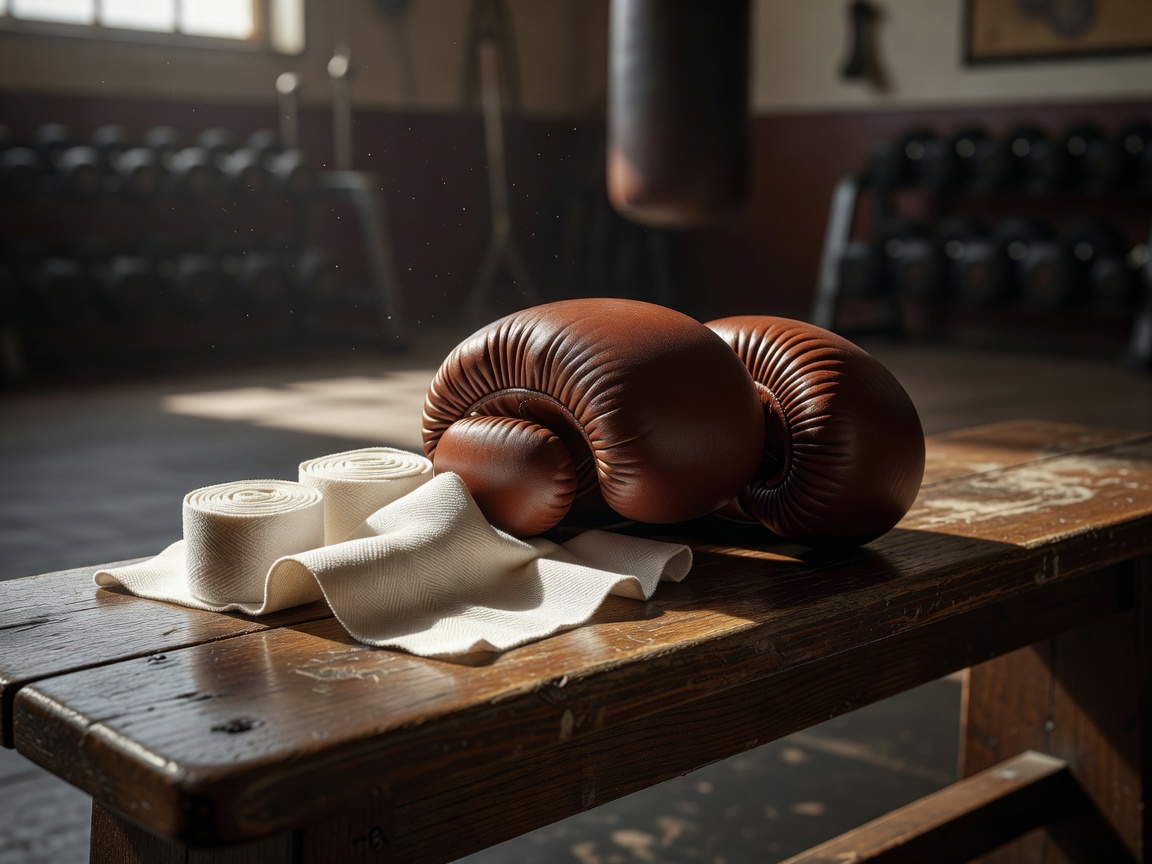
The Foundation: Gloves and Wraps
The single most critical investment any aspiring boxer can make is in proper hand protection. The human hand is a complex assembly of 27 bones, ligaments, and tendons that were never evolutionarily designed to repeatedly strike solid objects at high velocity. Without adequate protection, boxer's fractures and chronic wrist instability are inevitable.
Boxing gloves are generally categorised by weight, measured in ounces (oz). A common misconception among beginners is that heavier gloves hit harder. In reality, heavier gloves contain more padding, protecting both the wearer's hands and the sparring partner's head. For general bag work and pad work, 12oz to 14oz gloves are standard for most adult men and women. For sparring, 16oz gloves are the absolute minimum required by any reputable gym to ensure the safety of both participants.
Underneath the gloves sit the unsung heroes of boxing equipment: hand wraps. You must secure a pair of 180-inch Mexican-style (slightly elastic) hand wraps. Wrapping the hands is not primarily about padding the knuckles; it is about binding the bones of the hand together into a solid, cohesive unit to distribute the shock of impact and immobilise the wrist joint.
Understanding Glove Weight Selection
| Glove Weight | Primary Use Case | Target Boxer Weight Class |
|---|---|---|
| 10 oz - 12 oz | Mitt work, light bag work, competition (depending on rules) | Under 130 lbs (59 kg) |
| 14 oz | General training, heavy bag work, drilling | 130 lbs - 160 lbs (59 kg - 72 kg) |
| 16 oz | Mandatory for live sparring, endurance bag work | 160 lbs+ (72 kg+) |
| 18 oz+ | Heavyweight sparring, injury rehabilitation | 200 lbs+ (90 kg+) |
Headgear: Mitigation, Not Immunity
When transitioning from heavy bag work to live sparring, headgear becomes a mandatory piece of kit. It is vital to understand what headgear does and does not do. Headgear is highly effective at preventing superficial damage: cuts, lacerations, cauliflower ear, and bruising. It protects the skin from the impact of glove leather and accidental clashes of heads.
However, modern medical understanding dictates that headgear does not prevent concussions. Concussions are caused by the rapid acceleration and deceleration of the brain inside the skull. A padded helmet cannot stop the brain from sloshing against the cranium when the jaw is struck cleanly. Therefore, while headgear is essential, it must not breed a false sense of security. Superior defensive technique remains your primary protection against neurological trauma.
When selecting headgear, the compromise is always between visibility and protection. "Face-saver" headgear includes a rigid bar across the nose, eliminating broken noses but severely restricting downward vision, making it harder to see uppercuts and body shots. Standard "cheek-protector" headgear offers a better balance of peripheral vision and impact absorption.
Mouthguards and Footwear
Never spar or do partner drills without a mouthguard. A proper mouthguard absorbs shock, preventing teeth from shattering, but more importantly, it provides a cushion between the upper and lower jaw. This cushioning can reduce the severity of concussive force traveling up through the jawbone to the base of the skull. While boil-and-bite mouthguards are cheap and readily available, a custom-fitted mouthguard from a dental professional offers vastly superior protection and allows you to breathe more freely when fatigued.
Finally, boxing boots are entirely distinct from standard running shoes. Running shoes feature thick, cushioned heels designed for forward motion and shock absorption. Boxing requires lateral movement, pivoting, and a direct connection to the canvas to generate power from the ground up. Boxing boots feature a flat, thin sole with high ankle support, allowing the fighter to slide, pivot on the ball of the foot, and maintain structural integrity during sudden directional changes. Do not attempt serious ring work in running shoes, as the risk of rolling an ankle on the elevated heel is dangerously high.